


Page 1 of 44
TCPA Regulations and Compliance: Complete Guide
TCPA Policy Updates: Key Changes Telemarketers Must Know in 2025 Significant updates to the Telephone Consumer Protection Act (TCPA) among other regulations are set to take effect in 2025, introducing stricter regulations for telemarketers. These changes aim to tighten consent requirements and streamline revocation processes,… Continue Reading

October 23, 2020
Defining Meaningful Metrics: 6 Soft KPIs to Measure Customer Preference Collection
Measuring metrics and data can be overwhelming and confusing. Have you ever had trouble deciding where to start? Do you remember our previous blog series 5 Key and Measurable Reasons to Adopt Preference Management? We discussed some hard KPIs that may be the initial motivator… Continue Reading

Tags: campaign ROI, customer conversion, customer experience, customer interaction, customer lifetime value, customer loyalty, customer retention, customer ROI, customer satisfaction, data, hard KPIs, Harvard business review, life-cycle stages, lifecycle of the customer, marketing ecosystems, marketing efficiency, metrics, performance measurement, preference management system, soft KPIs
April 2, 2018
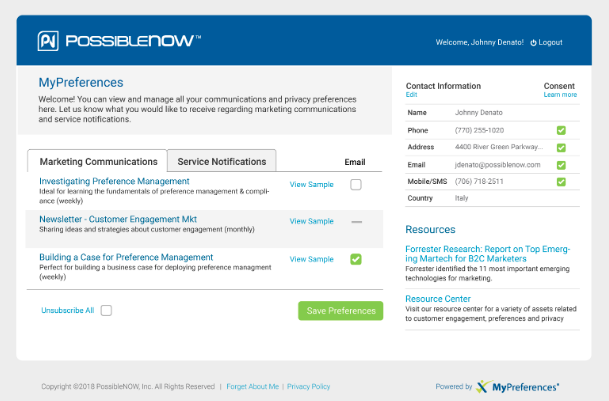
Email Preference Center Best Practices
What Are Email Preference Centers? Email preference centers are a tool that can help your consumers decide how they want you to interact with them. Instead of just sending out emails on a regular timed basis, having a preference center allows customers to have more… Continue Reading
October 23, 2020
The Basics of DNC Scrubbing: What Is a Do Not Call (DNC) Scrubber and Why Do You Need It?
What Is the Do Not Call (DNC) Registry? The Do Not Call Registry is a database of phone numbers and contact information maintained by the United States government’s Federal Trade Commission. The phone numbers on this registry have revoked consent to be contacted by companies… Continue Reading

November 2, 2022
What is Consent Management, How it Works, & Why it’s Important for Data Compliance
Just a few years ago, companies could obtain and monetize their customers’ data in any way they wanted. But with the recent rollout of the California Consumer Privacy Act (CCPA) and Europe’s General Data Protection Regulation (GDPR), companies can no longer gather personal data without… Continue Reading

January 27, 2021
Do Insurance Companies Cover TCPA Damages?
The short answer is, not always. While some insurance policies may offer coverage for Telephone Consumer Protection Act (TCPA) violations, it is not guaranteed, and businesses often find themselves facing substantial out-of-pocket costs. General liability and errors and omissions (E&O) insurance typically do not cover… Continue Reading

September 5, 2024
PossibleNOW and Jeff Jarvis have been featured in Total Retail’s Top 50 Tips of 2022 report
Original Article: TotalRetail Total Retail recently released the Top 50 Tips of 2022 report, comprised of the top 50 tips that have been featured throughout the year in Total Retail’s e-newsletter and website. We are excited to mention that PossibleNOW’s own Jeff Jarvis has been featured… Continue Reading

Tags: Jeff Jarvis, possiblenow, top 50 tips, top 50 tips of 2022, total retail, TotalRetail, zero-party, zero-party data
January 13, 2023
Data Silos Cause Communication Gaps
Summary Years ago, my mother called to say she’d visit at 5:00, but I forgot to tell my wife. When my mom arrived, the house was chaotic, and my wife was frustrated, saying it would have been nice to know in advance. This mirrors how… Continue Reading

Tags: communication, communication gaps, customer preferences, data, data silos, eric tejeda, possiblenow, preference management, preferences, tejeda
January 23, 2024
Difference Between Preferences & Consent
Summary The difference between a preference and consent can be understood through a simple analogy. A preference is like asking a friend if they want to play baseball; it’s an opt-in or opt-out choice for specific topics, such as outdoor gardening or power tools, in… Continue Reading

Tags: communication, Consent, customer preferences, eric tejeda, possiblenow, preference management, preferences, preferences and consent, tejeda
Integrate Do Not Call Compliance with Preferences
Summary Remember the cool kids in the 80s with Air Jordans, a Walkman, and Atari 2600? You can be the cool kid in marketing by implementing a consent and preference management solution. If you’re considering this, it’s a good time to also integrate a Do… Continue Reading

Tags: customer preferences, flavor, one flavor, possiblenow, preference management, preferences
January 22, 2024
Customer Preferences Require More Than One Flavor
Summary Do you think Starbucks would be successful if it only offered one flavor of coffee? Likely not. Just as people have varied coffee preferences, customers also have diverse communication preferences. For instance, some want basic product information, others enjoy detailed technical documents, and some… Continue Reading

Tags: customer preferences, flavor, one flavor, possiblenow, preference management, preferences
Give Customers Opt-Down Options
Summary Customer relationships can be as tricky as celebrity divorces, marked by irreconcilable differences. When a customer globally opts out of all communications, it’s like saying they never want to hear from you again. However, with some compromise, you have a 75% chance of saving… Continue Reading

Tags: enable compliance, organization, preference center, preference organization, preferences
Preference Center Organization
Summary You know that junk closet where you throw everything? We all have one. You don’t know where to put that unused DVD player, empty picture frame, or extra parts from your disposal, but you toss them in, knowing you’ll need them someday. Then, when… Continue Reading

Tags: enable compliance, organization, preference center, preference organization, preferences
January 20, 2024
Strategic Consultants Benefited Scotiabank
Summary One of the key reasons we decided to work with an external partner in building this tool is their expertise and knowledge of best practices. While we have technology expertise within our organization, we lack specific experience in managing preferences. We worked hard to… Continue Reading

Tags: Scotiabank, strategic consultants
January 17, 2024
The Ultimate DNC Compliance Checklist Before Launching Your Next Campaign
A structured pre-launch compliance review is the most effective way to prevent Do Not Call violations before outbound contact begins. Federal and state laws impose strict obligations on every business that makes marketing calls or sends texts, and launching a campaign without verifying compliance at… Continue Reading

July 23, 2026
The Impact of AI on Automating DNC Processes
AI-driven automation enables enterprises to enforce DNC compliance in real time across every stage of the process. Contact lists are scrubbed at the point of outreach, not days before. Opt-outs propagate across connected systems as soon as they are received. Regulatory rules are applied automatically… Continue Reading

Why DNC Compliance Needs Regular Auditing
Outbound contact programs operate under strict federal and state rules, and meeting those rules once does not keep a program compliant over time. Calling lists must be scrubbed against the Do Not Call registries on a set schedule. Opt-outs must be suppressed within required timeframes…. Continue Reading

The Connection Between DNC Compliance and Reputation Management
DNC compliance and brand reputation are directly connected. When an organization fails to honor Do Not Contact requests under laws such as the Telephone Consumer Protection Act (TCPA) or the FTC’s Telemarketing Sales Rule (TSR), the resulting complaints, fines, and negative publicity damage the brand’s… Continue Reading
DNC Compliance API Integration Guide for CRMs & Dialers
API integration is the most effective way to connect Do Not Call compliance directly to the CRM and dialer platforms where outbound campaigns are built and executed. Federal laws like the Telephone Consumer Protection Act (TCPA) and the FTC’s Telemarketing Sales Rule (TSR), along with… Continue Reading

June 26, 2026
Free vs. Paid DNC Scrubbing: Why Free Tools Can Cost You More
Free DNC scrubbing tools let businesses check contact lists against the National Do Not Call Registry at no cost. But the federal registry is only one of several databases that outbound programs need to scrub against. State-level DNC registries, the FCC’s Reassigned Numbers Database, and… Continue Reading
DNC Compliance for Multi-Location Businesses: Centralize & Automate
Multi-location businesses face elevated Do Not Call compliance risk because opt-outs, suppression lists, and consent records are often managed separately by each branch, region, or call center. When one location fails to apply a suppression captured elsewhere, the result is unwanted outreach that can trigger… Continue Reading

How to Automate DNC Compliance Checks in Your Outbound Call Process
Automating DNC compliance checks means embedding scrubbing, suppression, and validation directly into outbound call workflows so every number is verified before a call is placed. Instead of relying on periodic batch processes or manual lookups, automation applies compliance rules consistently and in real time, reducing… Continue Reading

DNC Compliance for Text Messaging Campaigns: Best Tools for 2026
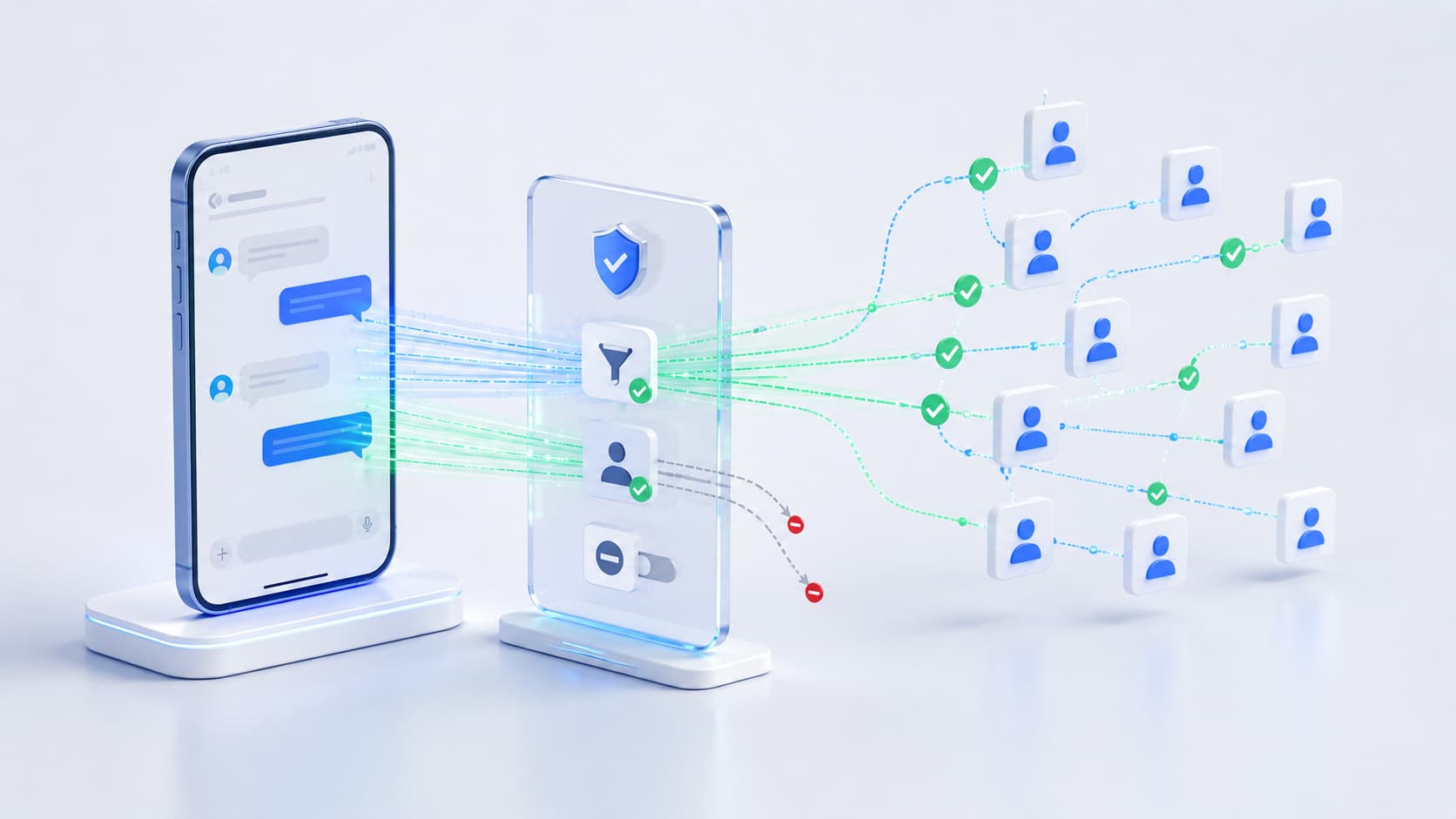
Running compliant text messaging campaigns in 2026 requires tools that can automate consent capture, scrub contact lists against wireless and national DNC databases, and process opt-outs across every system that touches outbound messaging. Federal and state regulations governing SMS marketing are strict, and the financial… Continue Reading
June 25, 2026
Turnkey DNC Compliance: Get Protected Without the IT Headache
Turnkey DNC compliance means getting full protection against Do Not Call violations without building or maintaining the underlying compliance infrastructure yourself. Rather than committing internal engineering teams to integrate registries, schedule recurring scrubs, enforce state-by-state rules, and keep pace with shifting regulations, organizations can rely… Continue Reading

Page 1 of 44


