


Resource Center
Best Practices for Managing Do Not Email Lists
Type: Blog
Topic: Do Not Call Solution
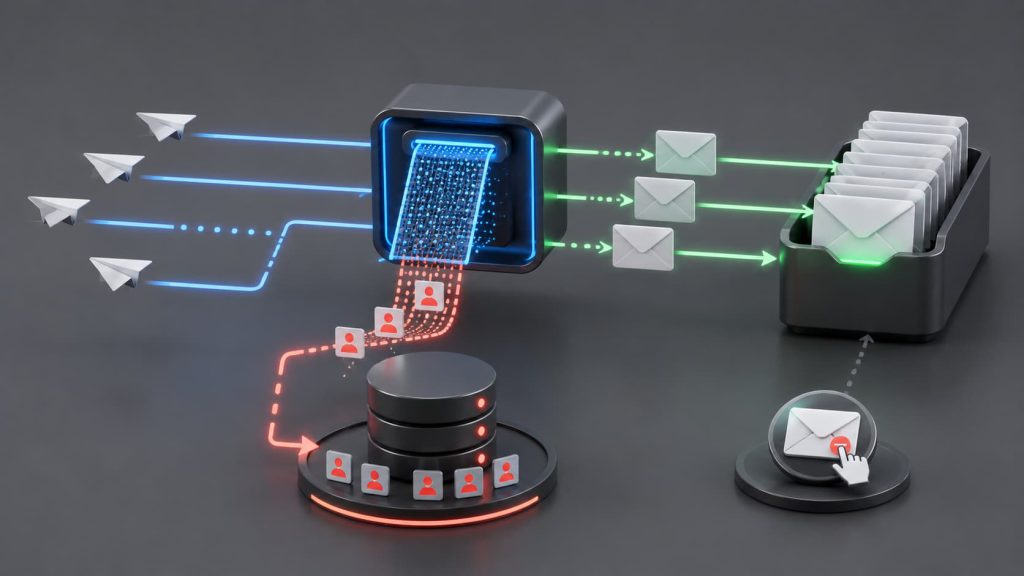
Email remains one of the most effective marketing channels, but it also carries significant compliance obligations. Under the CAN-SPAM Act, businesses must maintain and honor a suppression list of recipients who have opted out of commercial email, ensuring those addresses are not used in future campaigns, whether by the company or by third parties acting on its behalf. The law covers all commercial messages, including business-to-business email. Failing to manage these lists correctly can lead to steep fines, damaged deliverability, and loss of customer trust.
For enterprises managing complex outbound communication, PossibleNOW helps maintain compliance with Do Not Email requirements through DNCSolution®, which applies suppression across phone, email, text, and mail, and through MyPreferences®, which centralizes consent and preference management.
Here are key actions that every business should take to manage Do Not Email lists effectively:
- Make unsubscribing clear, effortless, and one-click
- Process opt-out requests quickly, ideally within 24 hours
- Maintain a centralized suppression list across all systems
- Offer alternatives through a preference center
- Keep lists clean by removing invalid, outdated, or inactive addresses

“If opt-out requests aren’t processed quickly and accurately, businesses face compliance exposure and lose credibility with their customers. Fines under the CAN-SPAM Act can reach up to $53,088 per non-compliant email. To avoid these steep penalties, suppression list management needs to be consistent across every platform.”
In the following sections, you’ll find information on:
Speak With an Expert Today
10 Key Practices for Do Not Email Compliance
Make Opt-Out Effortless and Visible
Every commercial email must provide a clear unsubscribe option. Links should use straightforward language like “Unsubscribe” or “Manage Preferences” and be placed where recipients can easily find them, typically in both the footer and header of the message.
Modern inbox providers like Gmail and Yahoo also recognize List-Unsubscribe headers, which enable a one-click removal option directly from the email client. Adding this feature gives recipients an immediate, trusted way to opt out, lowering complaint rates and protecting sender reputation.
Honor Requests Promptly
While the CAN-SPAM Act allows up to 10 business days to process an opt-out, best practice is to act within 24 hours. Once a recipient unsubscribes, their address should be automatically added to the suppression list so no further emails are sent. Prompt action improves customer trust and reduces the risk of complaints.
The opt-out mechanism must remain functional for at least 30 days after the email is sent. Businesses cannot charge a fee, require personal information beyond an email address, or add any steps beyond a reply email or a single web page visit as a condition for honoring the request.
Ensure Accurate Headers, Subject Lines, and Sender Identification
The CAN-SPAM Act requires that “From,” “To,” “Reply-To,” and routing information accurately identify the person or business that initiated the message. Subject lines must reflect the actual content of the email, and the message must be clearly identified as an advertisement. Every commercial email must also include a valid physical postal address — whether a street address, a P.O. box registered with the U.S. Postal Service, or a private mailbox registered with a commercial mail receiving agency under postal regulations.
These requirements apply to every commercial email, regardless of whether the recipient is a customer, prospect, or business contact. Noncompliance with any of them can result in penalties of up to more than $53,000 per email.
Maintain a Centralized Suppression List
A suppression list must be unified across campaigns, brands, and platforms to prevent errors. Without centralization, opt-outs may slip through gaps, exposing the business to liability.
Suppression lists should also be audited regularly to remove duplicates, invalid entries, and outdated data. Opted-out email addresses cannot be sold or transferred to outside parties, with one exception: they may be shared with a company specifically hired to help with CAN-SPAM compliance. Organizations should also establish clear protocols for securely storing do-not-contact preferences to prevent unauthorized access and maintain defensible records.
Offer a Preference Center Instead of “Unsubscribe All”
Many recipients do not want to stop all communication. They may only want fewer messages or content that is more relevant to them. A preference center allows customers to choose topics of interest, select frequency, or reduce the number of messages they receive.
This approach reduces full opt-outs, preserves engagement, and demonstrates respect for customer choice. A well-designed preference center can reduce full opt-outs and preserve engagement, but it must always include a simple ‘unsubscribe all’ option to remain compliant. A consent management platform helps ensure these selections are captured accurately and applied consistently across systems.
Confirm Opt-Outs with a Neutral Message
After processing an unsubscribe, send a simple confirmation such as “You have been unsubscribed.” This reassures the recipient that their request was honored. The message should be brief and neutral. Avoid upselling or attempting to re-engage at this stage, since that can frustrate recipients and trigger complaints. If you choose to send a confirmation, ensure it is purely transactional and contains no promotional content, as that could trigger a new compliance obligation.
Prioritize List Hygiene Beyond Suppression Lists
Suppression lists protect against sending to opted-out addresses, but broader list hygiene is equally important. Remove invalid addresses, contacts that repeatedly bounce, and long-term inactive recipients. For example, multiple consecutive soft bounces (such as five in a row) are a clear signal that an address should be removed.
These steps help protect sender reputation and improve overall deliverability.
Automate Suppression and Compliance Tasks
Manual processes are prone to error, and even a single oversight can create compliance risk. Automating suppression and validation tasks helps reduce mistakes and maintain accuracy across campaigns.
DNCSolution® automates the processing of unsubscribes and scrubs email lists against CAN-SPAM requirements, while MyPreferences® records and manages opt-outs and preferences in real time. Together, they provide a centralized and automated way to keep suppression lists accurate across platforms. PossibleNOW’s Marketing Data Services further strengthen list health by validating addresses, correcting errors, and identifying bounce-prone contacts.
For organizations managing opt-outs across multiple channels, tracking consent alongside DNC requests ensures a complete and defensible record of each customer’s communication permissions.
Be Transparent at Opt-In
While the CAN-SPAM Act does not require prior consent to send commercial email (it’s an opt-out law), many organizations choose to implement opt-in or even double opt-in practices as a best practice. Doing so improves list quality, reduces complaint rates, and helps protect deliverability.
If you do use an opt-in approach, set expectations clearly at the time of sign-up by telling recipients what types of messages they’ll receive, how often, and how they can opt out at any time. This transparency builds trust and lowers the likelihood of future unsubscribes driven by surprise or frustration.
Monitor Third-Party Email Practices
Under the CAN-SPAM Act, businesses cannot contract away legal responsibility for email compliance. Both the company whose product is promoted in a message and the company that sends the message can be held liable for violations. This makes oversight essential for any organization that uses agencies, email service providers, or marketing partners to send commercial email on its behalf.
Establish clear compliance requirements in vendor agreements, audit third-party sending practices regularly, and confirm that all partners honor opt-out requests and maintain accurate suppression data. PossibleNOW’s DNC compliance platform helps enterprises maintain consistent compliance standards across internal teams and external partners.
State Laws and International Regulations Affecting Email Marketing
CAN-SPAM is the primary federal law governing commercial email, but it is not the only law that applies. State and international regulations add requirements that email marketers need to account for:
- State anti-deception laws. Some states, including Washington and California, maintain laws that prohibit false or misleading email headers and subject lines. These laws carry per-email statutory damages and allow individual consumers to file suit. Subject lines that overstate urgency or misrepresent offer terms — such as “Today Only” when a promotion runs for several more days — have been the basis for class action lawsuits against national retailers.
- State privacy laws. California’s CCPA (as amended by the CPRA) and similar statutes in other states govern how businesses collect, store, and share subscriber data, including email addresses. Obligations around data deletion, opt-out-of-sale provisions, and data minimization run alongside CAN-SPAM and directly affect how suppression lists are maintained.
- Canada’s Anti-Spam Legislation (CASL). Organizations that send commercial electronic messages to Canadian recipients must obtain express consent before sending — a stricter standard than CAN-SPAM’s opt-out framework.
Staying current with this evolving patchwork of federal, state, and international regulations is a compliance challenge in itself, and one reason enterprises rely on tools like RegInfoHub® to monitor changes as they happen.
How PossibleNOW Helps Businesses Manage Suppression Lists
Managing opt-outs consistently across platforms can be difficult for large enterprises. PossibleNOW provides the technology and expertise to simplify compliance:
- DNCSolution®, PossibleNOW’s DNC compliance platform, which extends Do Not Contact protection across phone, email, text, and mail.
- MyPreferences®, an enterprise platform that centralizes consent, preferences, and opt-outs across all systems, helping brands respect customer choices.
- RegInfoHub®, which provides up-to-date regulatory guidance across CAN-SPAM, state email laws, and evolving privacy regulations, helping compliance teams track changes that affect email marketing programs.
Inconsistent suppression practices across platforms and partners create compliance gaps that lead to penalties, deliverability problems, and eroded customer trust. PossibleNOW’s enterprise-grade tools help businesses close those gaps and maintain accurate, defensible email compliance programs. Contact a PossibleNOW expert today to strengthen your email suppression and compliance strategy.trategy? Explore how PossibleNOW can help you stay ahead of regulations and maintain engagement.
Request a Demo Today
About PossibleNOW
PossibleNOW is the pioneer and leader in customer consent, preference, and regulatory compliance solutions. We leverage our MyPreferences technology, processes, and services to enable relevant, trusted, and compliant customer interactions. Our platform empowers the collection, centralization, and distribution of customer communication consent and preferences across the
enterprise. DNCSolution addresses Do Not Contact regulations such as TCPA, CAN-SPAM and CASL, allowing companies to adhere to DNC requirements, backed by our 100% compliance guarantee.
PossibleNOW’s strategic consultants take a holistic approach, leveraging years of experience when creating strategic roadmaps, planning technology deployments, and designing customer interfaces. PossibleNOW is purpose-built to help large, complex organizations improve customer experiences and loyalty while mitigating compliance risk.

-
TCPA Regulations and Compliance: Complete Guide
Type: Blog
Topic: Do Not Call Solution
-
Defining Meaningful Metrics: 6 Soft KPIs to Measure Customer Preference Collection
Type: Blog
Topic: Preference Mgmt
-
Email Preference Center Best Practices
Type: Blog
Topic: Preference Mgmt
-
The Basics of DNC Scrubbing: What Is a Do Not Call (DNC) Scrubber and Why Do You Need It?
Type: Blog
Topic: Do Not Call Solution
-
What is Consent Management, How it Works, & Why it’s Important for Data Compliance
Type: Blog
Topic: Consent Mgmt
-
Do Insurance Companies Cover TCPA Damages?
Type: Blog
Topic: Do Not Call Solution
-
8 Best Practices for Capturing GDPR Consent
Type: Webinars
-
Data Silos Cause Communication Gaps
Type: Videos
Topic: Preference Mgmt
-
Difference Between Preferences & Consent
Type: Videos
Topic: Preference Mgmt
-
Integrate Do Not Call Compliance with Preferences
Type: Videos
Topic: Preference Mgmt
-
Customer Preferences Require More Than One Flavor
Type: Videos
Topic: Preference Mgmt
-
Give Customers Opt-Down Options
Type: Videos
Topic: Preference Mgmt
-
Preference Center Organization
Type: Videos
Topic: Preference Mgmt
-
Strategic Consultants Benefited Scotiabank
Type: Videos
Topic: Industry Testimonials
-
The Ultimate DNC Compliance Checklist Before Launching Your Next Campaign
Type: Blog
Topic: Do Not Call Solution
-
The Impact of AI on Automating DNC Processes
Type: Blog
Topic: Do Not Call Solution
-
Why DNC Compliance Needs Regular Auditing
Type: Blog
Topic: Do Not Call Solution
View Other Resources


